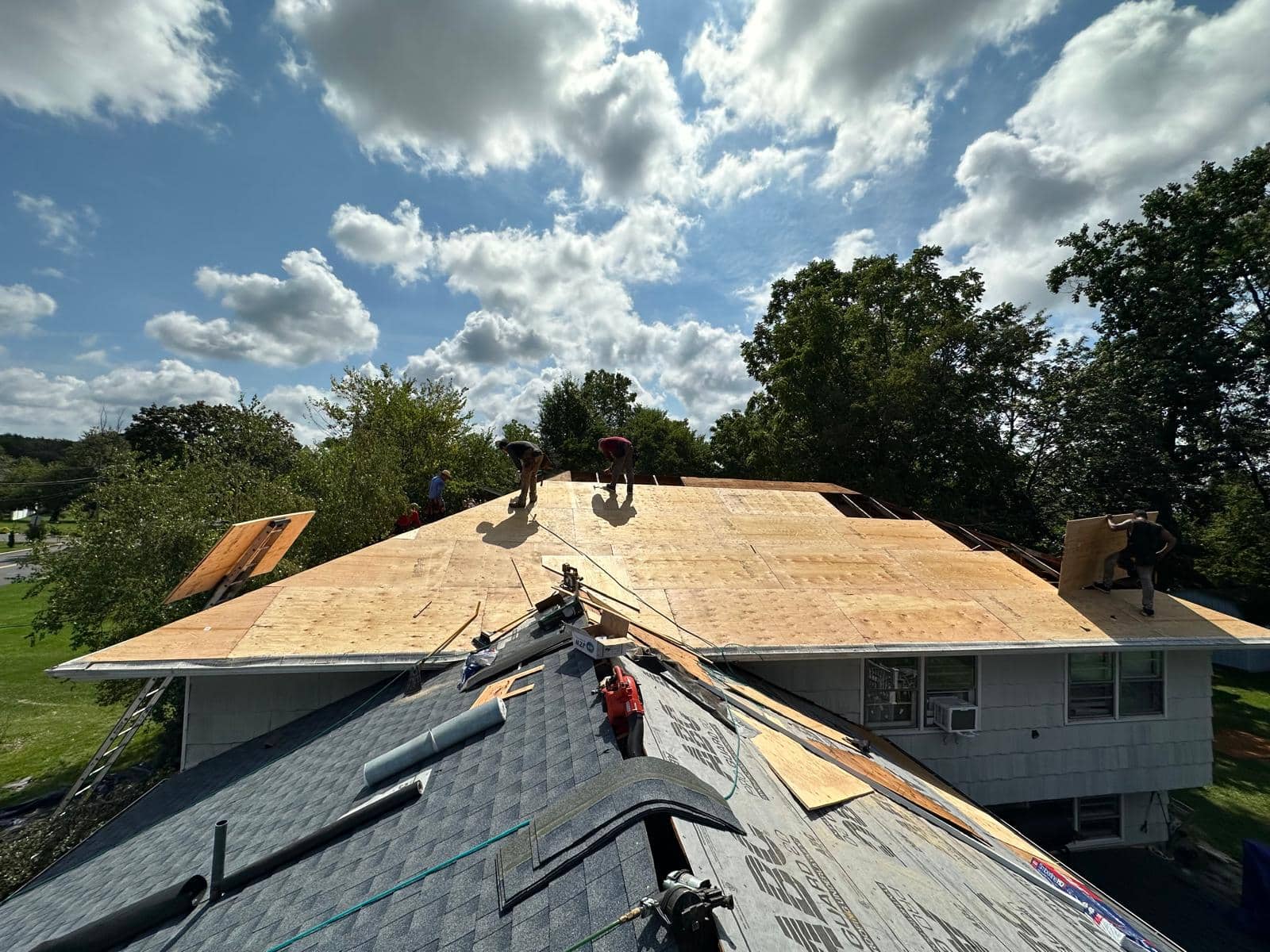
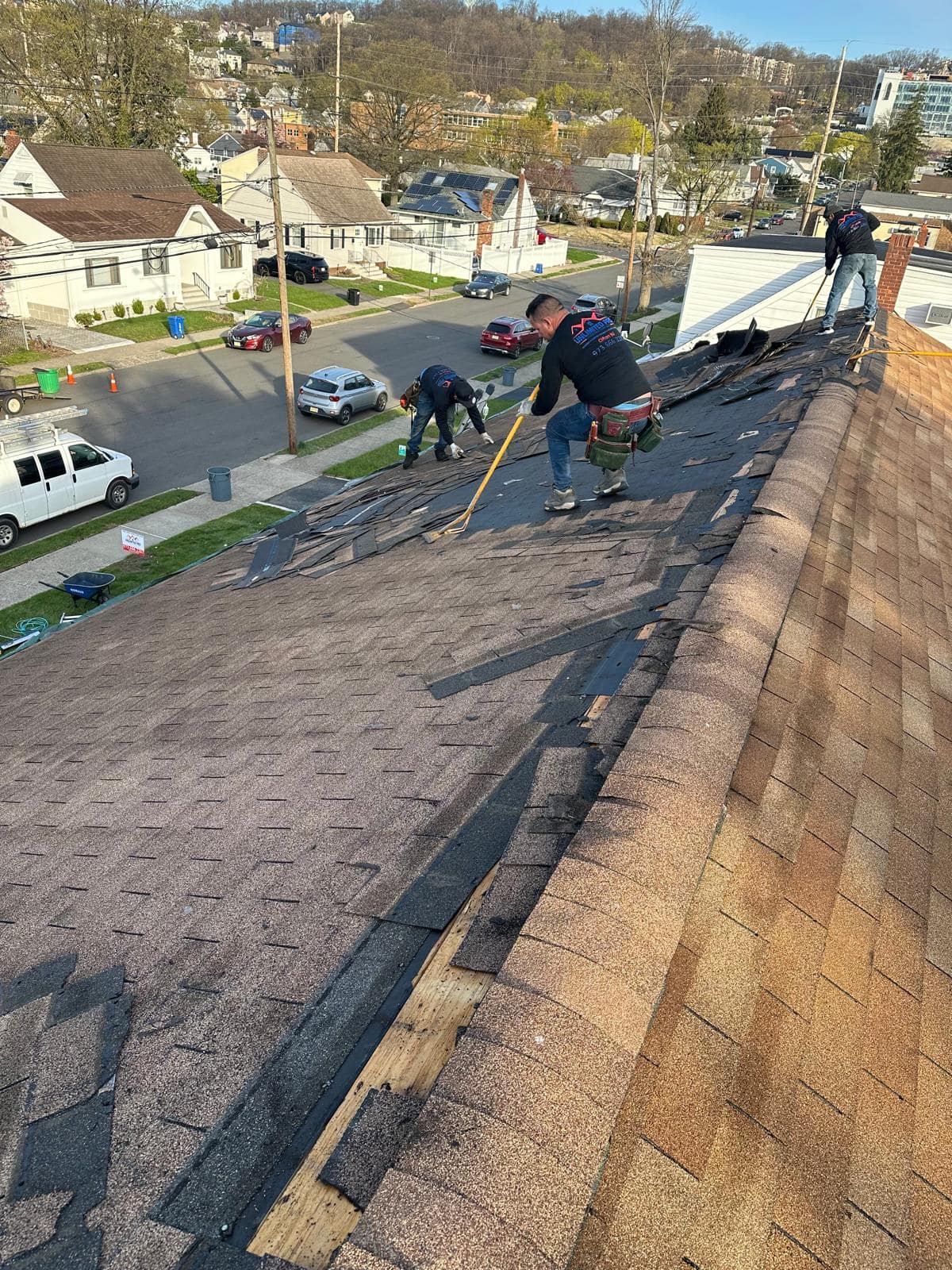
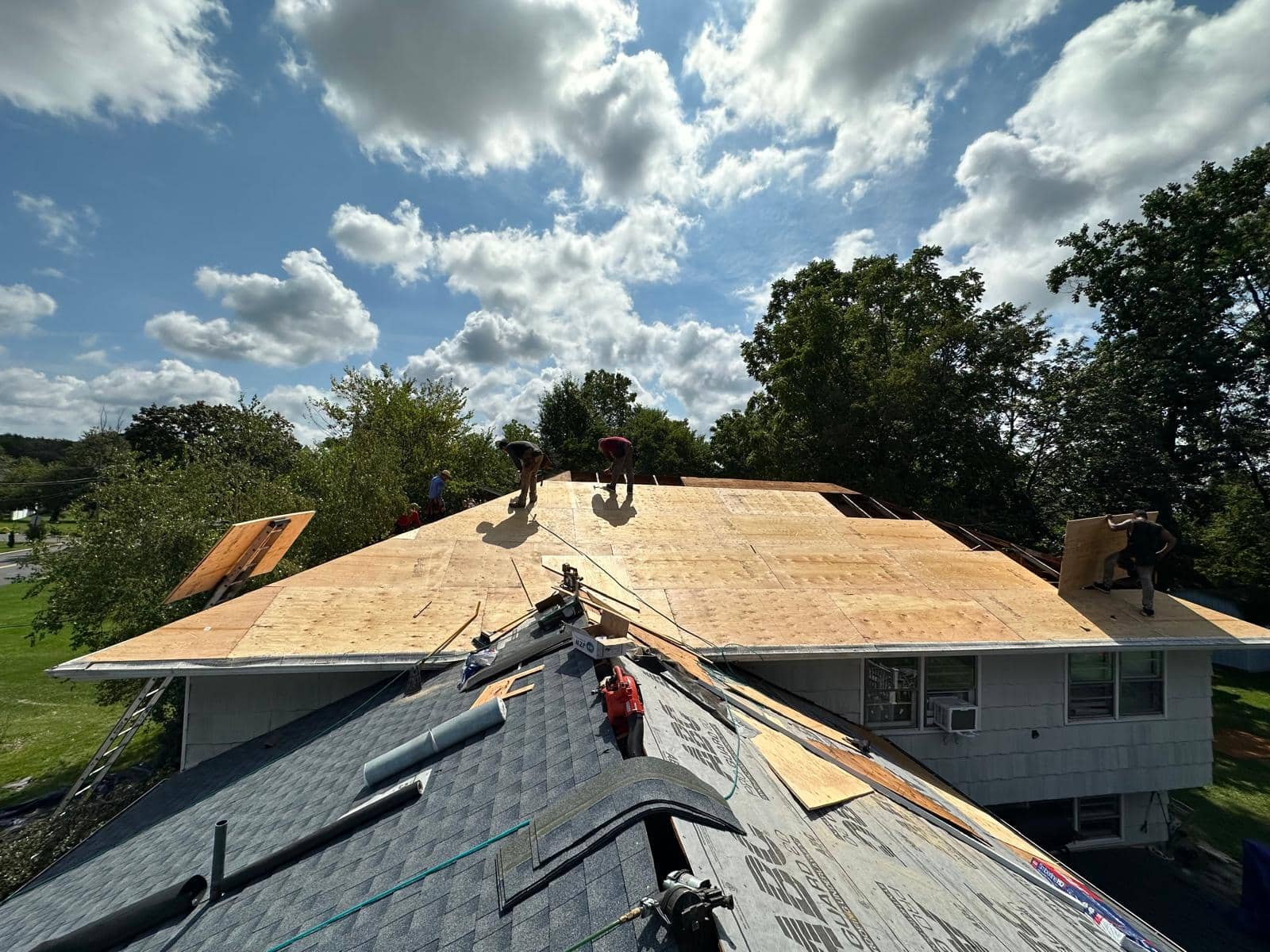
A brown ring on the ceiling. A drip during a heavy rain. A musty smell in an upstairs closet. However you discovered it, a roof leak is stressful, and the questions come fast: How bad is it? Where is it coming from? Can it wait until the weekend?
This guide covers what to do right now, where roof leaks on New Jersey homes usually start, and when roof leak repair is a simple fix versus a sign of something bigger.
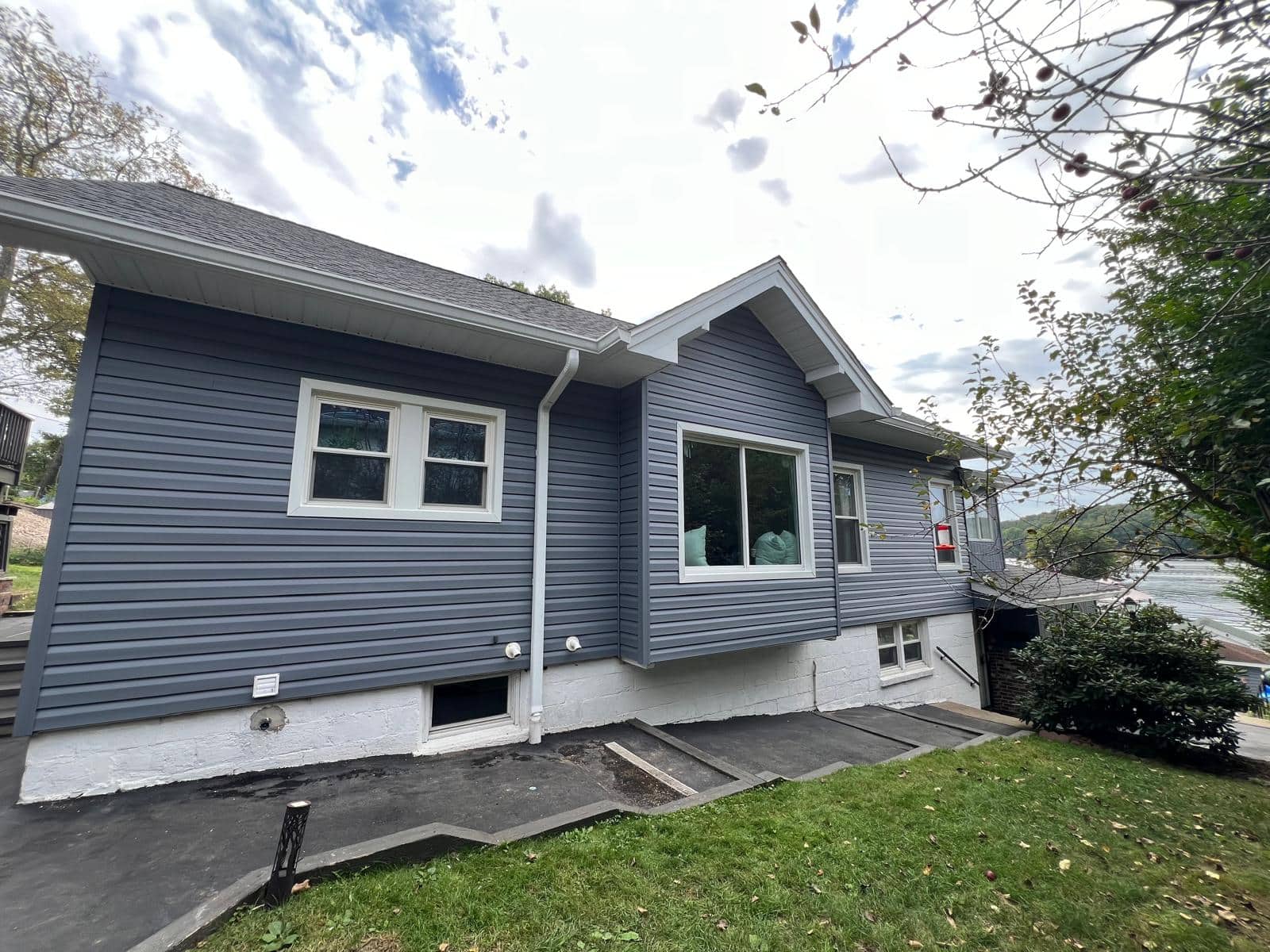
What to Do in the First Hour
You can’t fix the roof from inside, but you can limit the damage while you wait for help.
- Contain the water. Put a bucket under the drip and a towel inside the bucket to stop splashing. Move furniture, rugs, and electronics out of the way.
- Watch for electrical hazards. If water is near a light fixture, ceiling fan, or outlet, turn off that circuit at the breaker panel.
- Relieve a bulging ceiling. If paint or drywall is ballooning with trapped water, a small hole poked at the lowest point (with a screwdriver, standing to the side, bucket underneath) lets water drain in a controlled way instead of bringing down a larger section. If the ceiling is sagging badly, stay out from under it.
- Take photos and video. Capture the stain, the drip, and any damaged belongings. Date-stamped photos help with insurance and help your roofer trace the source.
- Look in the attic, if it’s safe. With a flashlight, look for wet insulation, dark stains on the wood, or daylight. Step only on the framing, never between joists.
- Stay off the roof. Wet shingles are slippery, and storms can leave damage you can’t see from above. This is the job for a professional.
If water is actively pouring in or a storm has opened up part of your roof, don’t wait. We answer 24/7, and our emergency roofing team can tarp and secure the area to stop further damage.
Why the Stain Is Rarely Right Under the Leak
Here’s what surprises most homeowners: water gets in at one spot, then runs downhill along the roof deck, rafters, or the top of the insulation before it finds a place to drip. A stain in your living room ceiling might be caused by flashing six feet uphill near the chimney.
That’s why “patch the spot above the stain” repairs so often fail. Good roof leak repair starts with tracing the water back to where it actually entered.
The 8 Most Common Sources of Roof Leaks on NJ Homes
After more than 25 years working on New Jersey roofs, we see the same culprits again and again. Roughly in order of how often we find them:
1. Cracked plumbing vent boots
The rubber collars around plumbing pipes dry out and crack from years of summer sun and winter cold. It’s one of the most common leaks we repair, and one of the least expensive to fix when it’s caught early.
2. Chimney flashing
Brick and roofing move differently as temperatures change. Over time, the metal flashing and counter-flashing around a chimney loosen, or the mortar holding them fails. Older chimneys that were “sealed” with roofing cement instead of properly flashed are frequent offenders. If the masonry itself is failing, chimney repair may be part of the fix.
3. Step flashing at walls and dormers
Wherever a sloped roof meets a vertical wall, small L-shaped pieces of metal should be woven in with each row of shingles. Missing, rusted, or incorrectly installed step flashing sends water behind the siding and into the wall.
4. Valleys
Valleys carry more water than any other part of the roof. Worn shingles, debris buildup, or poor original installation can let water work under the roofing.
5. Skylights
Leaks around skylights come either from failed flashing around the frame or a failed seal in the unit itself. A roofer can tell you which one, and whether the skylight is worth keeping.
6. Wind-lifted or missing shingles
Nor’easters and summer storms can break the seal on shingles or tear them off entirely. Even a single missing shingle exposes the underlayment, which isn’t designed to be the only barrier for long.
7. Ice dams
If your leak shows up in winter near an outside wall, especially after snow, an ice dam is a likely suspect. We explain why they form and how to prevent them in our guide to ice dams in New Jersey.
8. Clogged or overflowing gutters
Strictly speaking this isn’t a roof leak, but water backing up out of full gutters can soak the fascia and roof edge and show up inside as a leak along an exterior wall. Keeping gutters clear and properly pitched matters.
Is It Really a Roof Leak? Check for Attic Condensation
Not every water stain is a roof leak. In New Jersey winters, warm, moist air from the house can rise into a cold attic and condense on the underside of the roof deck and on nail tips. On a sunny day, that frost melts and drips, and it looks exactly like a leak.
Clues that point to condensation instead of a leak:
- Water appears on sunny winter days, not only during rain
- Many small wet spots or rusty nail tips across the attic, instead of one wet area
- Frost on the underside of the roof deck on cold mornings
- Bathroom or kitchen exhaust fans that vent into the attic instead of outside
The fix for condensation is ventilation and air sealing, not new shingles. This is exactly why a proper inspection matters before anyone sells you a roof.
What a Professional Roof Leak Repair Visit Looks Like
When we come out for a leak, the goal is to find the entry point, not just the drip. A thorough visit usually includes:
- An interior check of the stain, the attic above it, and the path the water took along the framing
- A roof-surface inspection uphill from the stain, focusing on flashing, pipe boots, valleys, and any wall or chimney connections
- Photos of what we find, so you can see the problem for yourself
- A clear recommendation: a targeted repair, a temporary fix until better weather, or a conversation about replacement if the roof is failing more broadly
What Affects Roof Leak Repair Cost?
The price depends almost entirely on the source. Replacing a cracked pipe boot or a few shingles is a small job. Rebuilding chimney flashing, reworking a valley, or replacing rotted decking underneath takes more time and material. Steep roofs and hard-to-reach areas also add labor. Any honest estimate should come after the source is found, not before.
Repair or Replace After a Leak?
Most leaks can be repaired. A single leak on a roof in otherwise good condition is usually a flashing, boot, or shingle repair.
Replacement becomes the smarter option when:
- Leaks keep returning in different places
- Shingles are curling, cracking, or losing granules across large areas
- The roof deck is soft in multiple spots
- The roof is near or past 20 to 25 years old
If you’re in that situation, our roof replacement cost guide will help you budget.
Does Homeowners Insurance Cover Roof Leaks?
It depends on the cause. Most policies cover sudden damage from events like wind, hail, or a falling tree. They generally don’t cover leaks caused by age, wear, or lack of maintenance. Most policies also expect you to take reasonable steps to prevent further damage, which is another reason to get the leak secured quickly. For storm-related leaks, see our step-by-step storm damage guide.
Frequently Asked Questions
Can a roof leak wait a few days?
A slow drip contained in a bucket can usually wait a day or two for an inspection. But every rain adds moisture to insulation, drywall, and framing, and mold can begin growing in damp materials within a couple of days. Don’t let it go for weeks.
Can a roof be repaired while it’s raining?
Permanent repairs need a dry surface. During rain, a roofer can often install a temporary tarp or emergency patch, then complete the permanent repair once the roof dries.
Why does my roof only leak in heavy, wind-driven rain?
Wind pushes water sideways and even uphill under shingles and flashing. Leaks that only show up in storms often point to flashing at walls, chimneys, or skylights, or to shingles that have lost their seal.
How much does roof leak repair cost?
Simple repairs like replacing a pipe boot or a few shingles cost far less than repairs involving chimney flashing, valleys, or rotted decking. The price depends on the source, which is why an inspection comes first.
Get Your Roof Leak Found and Fixed
The fastest way to stop a leak for good is to find where the water actually gets in. Unlimited Pro Construction provides roof leak repair for homeowners in Bergen, Passaic, Essex, Morris, and nearby New Jersey counties, with more than 1,200 completed projects behind us.
Call (973) 666-2870, available 24/7, or book a free roof inspection.
Unlimited Pro Construction
NJ License #13VH11083200
32 Samuel Avenue, Clifton, NJ 07013