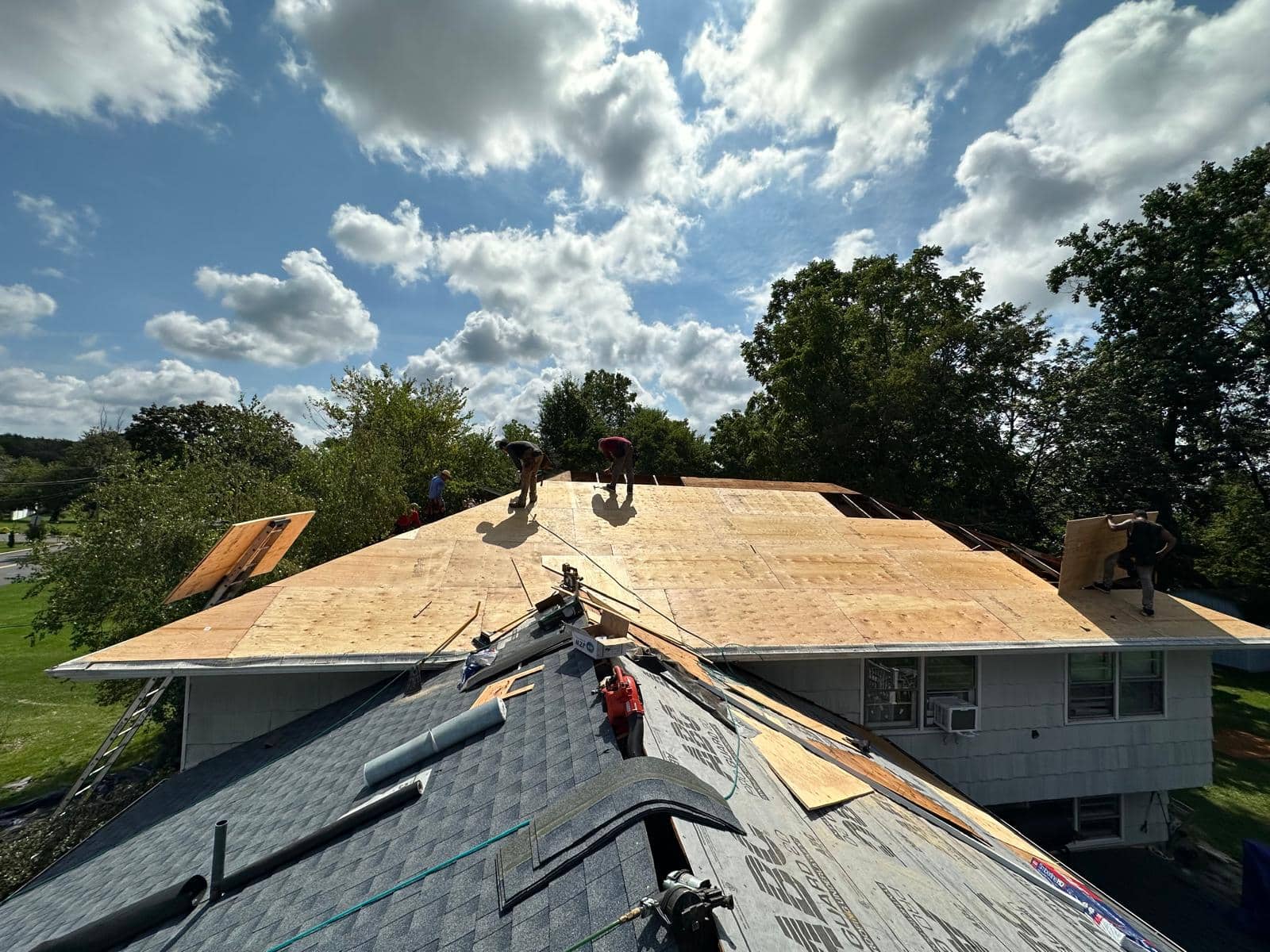
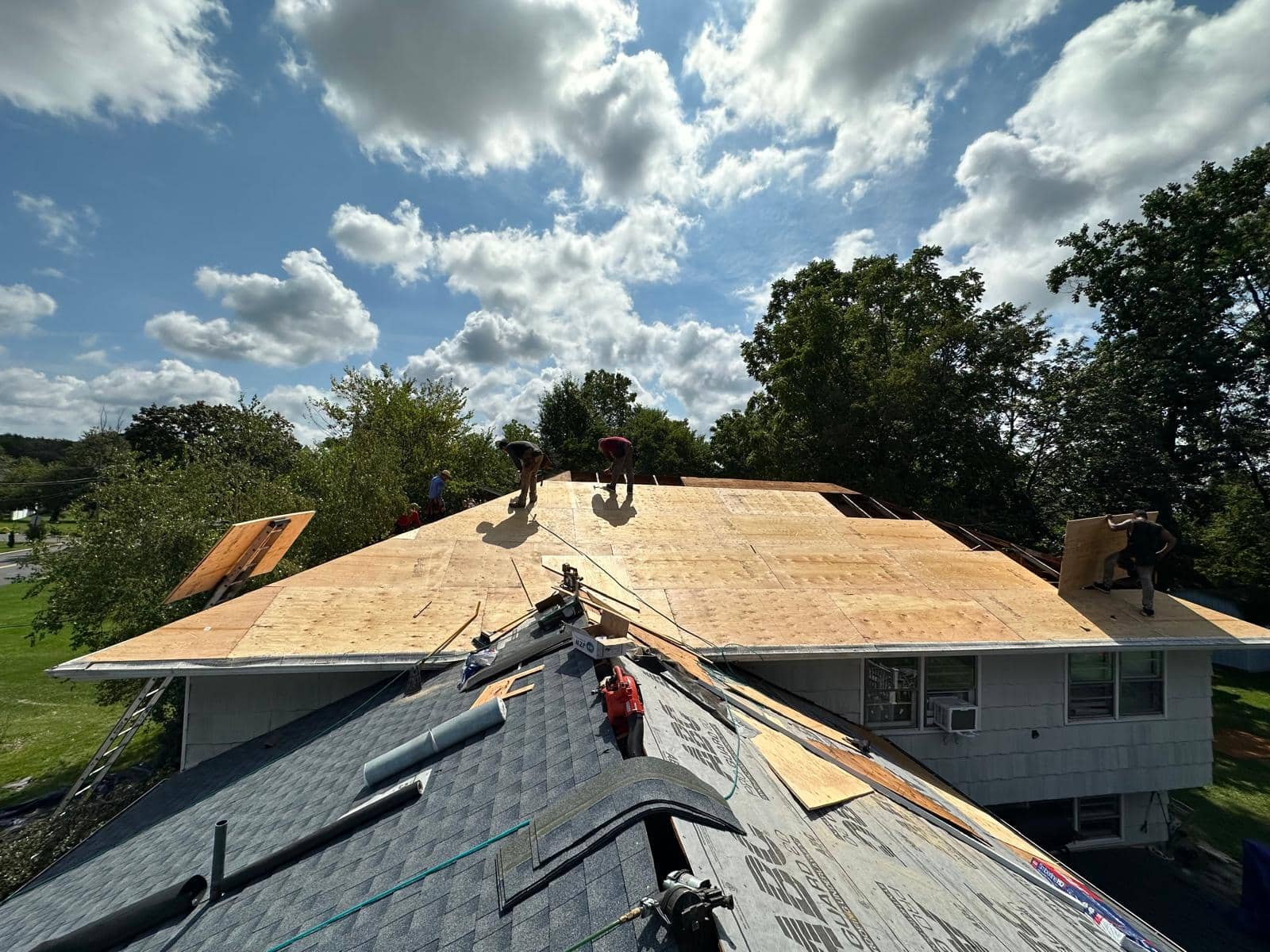
New Jersey roofs take a beating. Nor’easters in winter, severe thunderstorms in summer, and the remnants of tropical storms in late summer and fall can all bring high winds, heavy rain, and falling trees. When the storm passes, you’re left wondering what happened up there and what to do about it.
This step-by-step guide covers how to handle roof storm damage in NJ, from the first minutes after the storm to a completed repair, including how to protect your insurance claim.
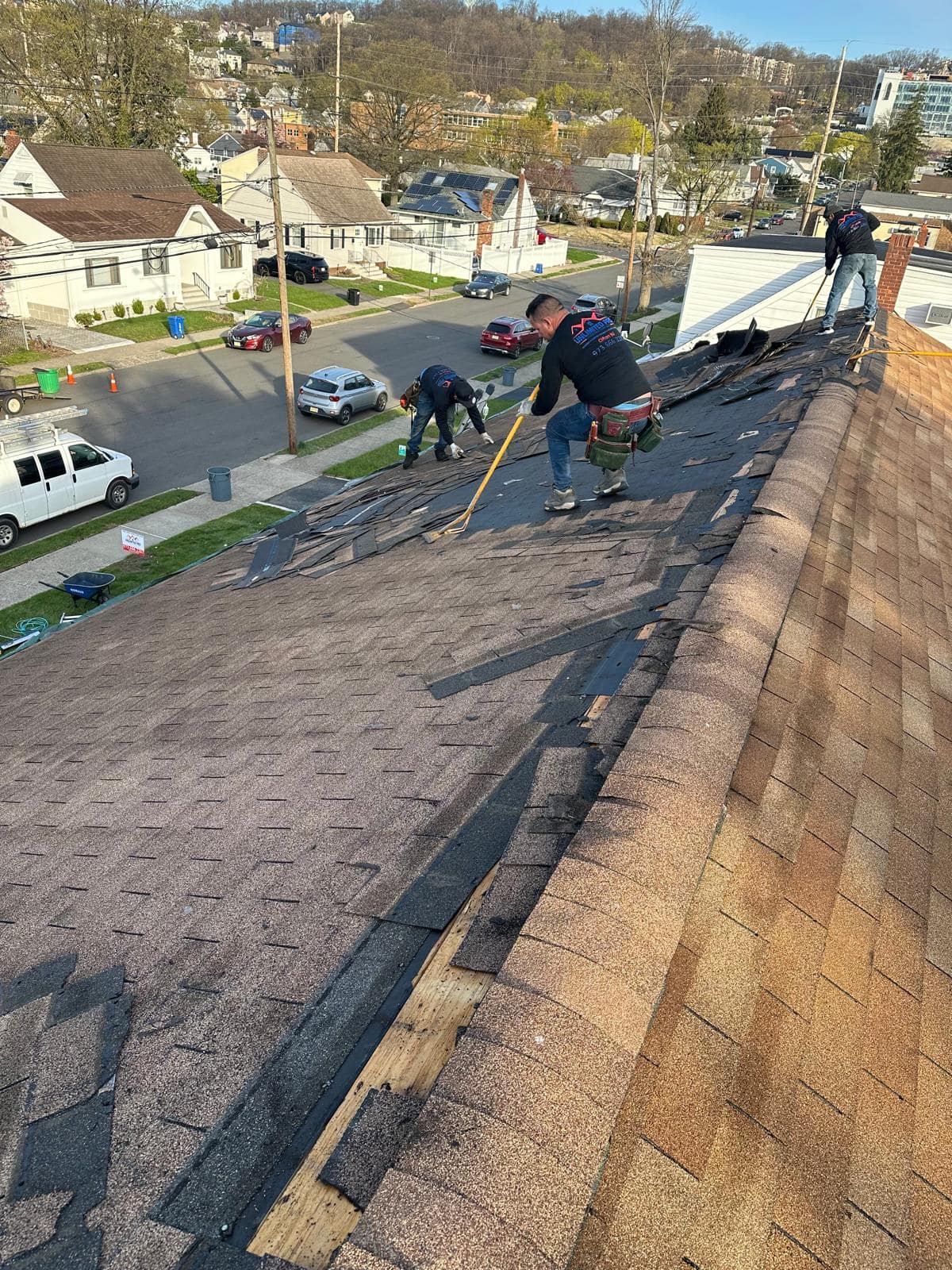
Step 1: Make Sure Everyone Is Safe
Before thinking about the roof, check for dangers:
- Downed power lines: Stay far away and report them to your utility company. Assume every downed line is live.
- A tree on the house: Keep everyone out of rooms directly under it. The roof structure may be compromised.
- Sagging ceilings or active water near electrical fixtures: Stay clear and shut off power to the affected area at the breaker panel if you can do so safely.
For storm preparation and safety information, Ready.gov is a reliable resource.
Step 2: Check for Roof Storm Damage From the Ground
Never climb onto a roof after a storm. Instead, walk around your home and look up. Binoculars help.
Signs of wind damage
- Missing shingles or patches of exposed underlayment
- Shingles that are creased, flipped up, or hanging
- Missing ridge caps along the peak
- Bent or loosened flashing around chimneys and vents
- Shingle pieces in the yard
Signs of hail damage
- Dents in gutters, downspouts, metal vents, or window screens
- Dark spots on shingles where granules were knocked off
- Heavy granule buildup at the bottom of downspouts
Signs of impact damage
- Branches or limbs on the roof
- Punctures, cracked shingles, or damaged gutters where debris hit
Then check inside: look at upstairs ceilings, closets, and, if it’s safe, the attic for fresh water stains, damp insulation, or daylight.
Step 3: Document Everything Before Anything Is Moved
Good documentation is the single most important thing you can do for an insurance claim.
- Take wide photos of each side of the house, then close-ups of damage
- Photograph debris before removing it, including where branches landed
- Record video of any active leaks inside
- Note the date and time of the storm
- Keep receipts for anything you spend, such as tarps, water cleanup, or a hotel stay
Step 4: Prevent Further Damage With Emergency Protection
Most homeowners policies expect you to take reasonable steps to protect your home from additional damage after a covered event. If rain can get in, the opening needs to be covered quickly.
Emergency tarping should be done by a roofing professional. A properly installed tarp is secured to prevent wind from lifting it, extends past the damaged area, and is fastened in a way that doesn’t create new leaks. Our emergency roofing team answers 24/7 and can secure your roof after a storm. Keep the invoice, as emergency protection is often part of a covered claim.
Step 5: Get a Professional Roof Inspection
Storm damage isn’t always obvious from the ground. Wind can break the seal on shingles without removing them, and those shingles may fail in the next storm. A roofer can inspect the surface, flashing, and attic, then give you a written account of what was damaged by the storm versus what was already worn.
That distinction matters, because insurance typically covers sudden storm damage, not age-related wear. Book a free roof inspection to know exactly where you stand before you call your insurer.
Step 6: Review Your Policy and File the Claim
Before you file:
- Find your deductible. Some policies have separate wind or named-storm deductibles, often a percentage of your dwelling coverage rather than a flat amount.
- Check the filing deadline. Policies require prompt notice. Don’t wait weeks.
- Compare the damage to your deductible. If the repair costs less than your deductible, filing may not make financial sense.
When you file, provide your photos, the date of the storm, and your roofer’s findings. Keep a log of every conversation: date, name, and what was said.
Step 7: Meet the Adjuster
The insurance company will send an adjuster to inspect the damage. If possible, have your roofer present. A roofer can point out damage that’s easy to miss, like lifted shingles or damaged flashing, and make sure nothing is overlooked.
After the inspection, you’ll receive a settlement estimate. Compare it line by line with your roofer’s estimate. If items are missing, you can ask the insurer to review them.
Step 8: Get the Work Done Right
Once your claim is approved, schedule repairs promptly. Temporary tarps aren’t meant to last through several storms. If the damage is extensive enough to justify a full replacement, our roof replacement process guide explains what happens on installation day, and our roof replacement cost guide covers pricing.
How to Spot Storm Chasers
After big storms, out-of-area contractors often go door to door in affected neighborhoods. Some are legitimate. Many are not. Be cautious if a contractor:
- Knocks on your door uninvited right after a storm
- Has out-of-state plates and no local office address
- Asks you to sign a contract on the spot, or signs you over to them with an “assignment of benefits”
- Offers to waive or “cover” your deductible, which can amount to insurance fraud
- Offers to negotiate your claim for you. In New Jersey, that role requires a public adjuster’s license
- Can’t show a New Jersey Home Improvement Contractor registration number
You can verify a contractor’s registration through the NJ Division of Consumer Affairs. A local contractor with a physical address will still be around if something goes wrong with the work.
Frequently Asked Questions
Does homeowners insurance cover roof storm damage in NJ?
Most standard homeowners policies cover sudden damage from wind, hail, and falling trees. They typically don’t cover damage from age, wear, or poor maintenance. Your specific coverage, deductible, and exclusions depend on your policy.
How long do I have to file a roof damage claim?
It varies by policy, but most require prompt notice after the damage occurs. Check your policy and report damage as soon as possible.
Will filing a claim raise my premium?
It can, depending on your insurer and claim history. That’s one reason to get a professional estimate first, so you can decide whether a claim makes sense.
Can a few missing shingles wait?
Not for long. Missing shingles expose the underlayment, which isn’t designed to be your only protection. Wind also tends to peel back the shingles around an opening, so small damage often gets bigger with the next storm.
Dealing with an active leak right now? See how to find the source of a roof leak.
Roof Storm Damage? Get a Local Roofer You Can Reach
Unlimited Pro Construction is based in Clifton and has served homeowners across Bergen, Passaic, Essex, Morris, Hudson, and surrounding New Jersey counties for over 25 years, with more than 1,200 completed projects. We provide emergency protection, storm damage inspections, repairs, and full roof replacement.
Call (973) 666-2870, available 24/7, for fast help after a storm.
Unlimited Pro Construction
NJ License #13VH11083200
32 Samuel Avenue, Clifton, NJ 07013